Bitcoin Realized Profit#
Definition#
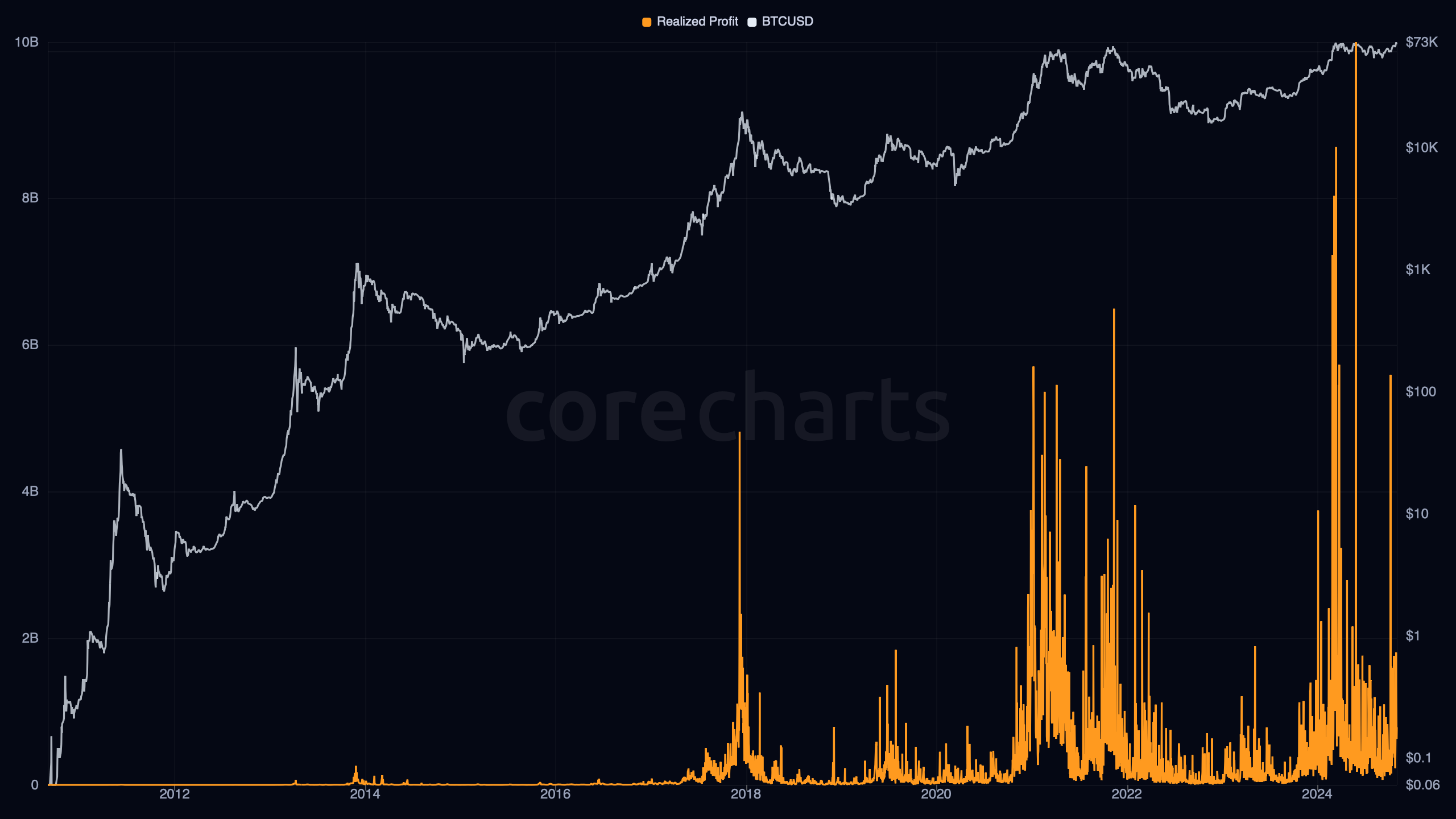
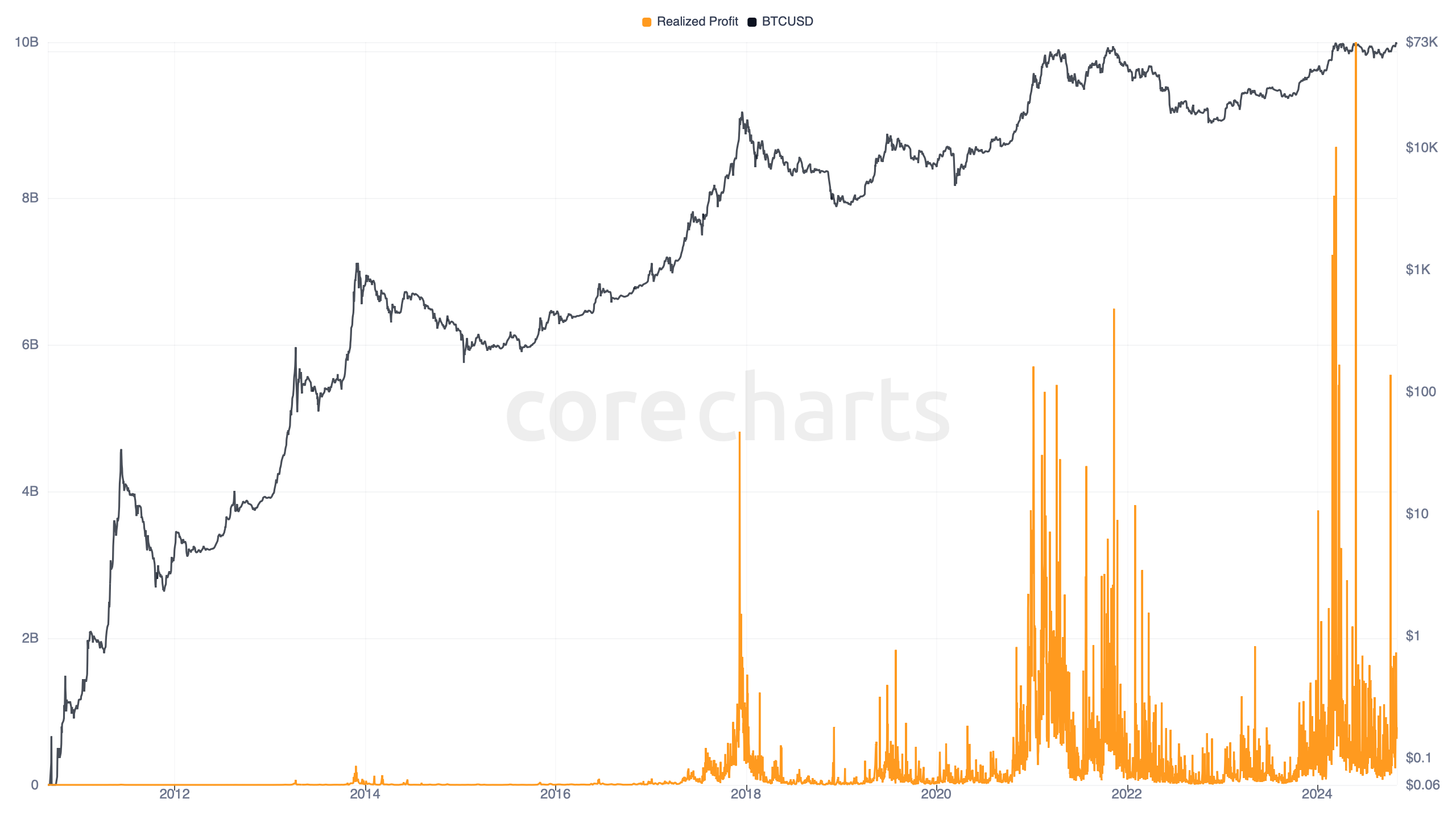
Bitcoin Realized Profit measures the dollar value of gains locked in when coins are spent above their realized cost basis.
In CoreCharts, the calculation is performed on spent coins only. For each coin spent during the day, the realized price at the spend date is compared with the realized price at the coin’s prior on-chain movement. Positive differences contribute to realized profit.
The unit is USD. The series is daily and flow-based.
This is not unrealized profit. It does not describe the gain embedded in current supply. It records gains that were actually crystallized on-chain through spending.
Interpretation#
High realized profit means a large USD amount of gains was taken during the day. That can come from broad participation, from a smaller amount of old low-cost supply being spent into strength, or from both.
A low reading can mean fewer profitable coins were spent. It can also mean profitable spending happened, but with narrow margins rather than large cost-basis gaps.
The metric is sensitive to age structure. Old coins spent after long dormancy can produce outsized realized profit even when spent BTC volume is not extraordinary.
Price And Market Regime#
Profit-Taking Waves#
Large spikes usually appear in strong uptrends or during sharp relief rallies. Price sits above a wide set of realized bases, and coins with embedded gains begin to move.
That condition often marks distribution more clearly than state metrics do. The profit had existed before. Realized Profit marks the moment it was locked in on-chain.
Mature Bull Conditions#
Sustained elevation in realized profit often appears when the market has been trading above aggregate cost basis for a while. More supply has room to realize gains, and more holders choose to spend into strength.
The same price level can generate very different realized profit across cycles. What matters is the distance to realized cost basis of the coins that are actually moving.
Relationship to other metrics#
Realized Loss is the mirror series on losing spends. Both are built from spent outputs and daily cost-basis comparison.
Net Realized Profit/Loss combines the two into a signed daily balance. Realized Profit keeps only the positive side of that ledger.
Supply in Profit sits elsewhere in the stack. It counts coins currently above cost basis, whether or not they move. Realized Profit starts only when those coins are spent.
Methodology Note#
CoreCharts computes realized profit from spent coins whose current spend-day price exceeds their prior realized price. The result is aggregated in USD across the day.
That means the series can stay quiet even in a profitable market if old coins do not move.